_edited.png)
Lake St Clair, Tasmania - Ancient Wilderness at Australia’s Deepest Lake
- Nov 22, 2021
- 3 min read
Updated: Jan 28

Lake St Clair, Tasmania - Ancient Wilderness at Australia’s Deepest Lake
Set at the southern end of the Cradle Mountain–Lake St Clair National Park, on the way to the West Coast of Tasmania, Lake St Clair is a place of remarkable beauty and deep tranquillity. As Australia’s deepest freshwater lake, it sits within the heart of the Tasmanian Wilderness World Heritage Area, surrounded by ancient forests, glacial valleys, and towering mountain peaks.
Carved by glaciers over millions of years, the landscape around Lake St Clair feels timeless. Dense forests of pencil pine and myrtle fringe the dark, reflective waters, while distant mountains provide a dramatic and ever-changing backdrop. It’s a destination that invites you to slow down, breathe deeply, and truly connect with Tasmania’s wild heart.
A Wilderness Area Rich in Life
The Lake St Clair area is not only scenically stunning, but also rich in wildlife. Visitors often spot Bennett’s wallabies and pademelons grazing near the water’s edge, especially in the early morning or late afternoon.
With a bit of patience and luck, you may also encounter wombats, echidnas, quolls, and even the elusive platypus in the quieter bays and rivers feeding into the lake. Birdlife is abundant, adding to the sense of life within this peaceful wilderness setting.


Lake St Clair Visitor Centre and Walks
The Lake St Clair Visitor Centre at Cynthia Bay is an excellent starting point for exploring the area. The award-winning centre provides information on the park’s natural and cultural history, as well as access to a variety of walking tracks suited to different abilities.
The Lake St Clair Walk is recognised as one of Tasmania’s 60 Great Short Walks, offering an ideal way to experience the southern end of the national park without committing to a long hike.
Lake St Clair Walk Details
Distance: 4.7 kilometres (circuit) - Time: Around 1.5 hours - Grade: 3 (moderate)
Starting and finishing at Cynthia Bay, this circuit combines several shorter walks into one varied and rewarding experience. We completed the walk as a loop from the Visitor Centre, enjoying the changing scenery along the way.
Watersmeet Nature Trail
Distance: 3.4 kilometres return - Time: Approximately 45 minutes
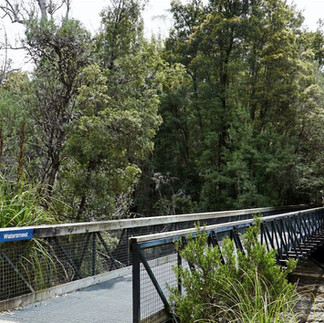
This lovely, mostly easy walk follows an old logging track through diverse vegetation. Along the way, you’ll see banksias, button grass plains, glacial erratics, fagus, and other alpine plants. The trail ends at Watersmeet Bridge, where the Hugel and Cuvier Rivers come together — a peaceful spot framed by forest and flowing water.
Platypus Bay
From Watersmeet Bridge, the walk continues along the Cuvier River toward Platypus Bay. This short extension leads to the edge of Lake St Clair, where a small viewing platform overlooks the calm waters. It’s a great place to pause, enjoy the lake views, and quietly watch for platypus, particularly in the early morning or late afternoon. A small beach area nearby offers a lovely spot to sit and take in the scenery.
Larmairremener Tabelti Aboriginal Cultural Walk
The walk then joins the Larmairremener Tabelti, an Aboriginal Cultural Walk that adds important cultural depth to the experience. Along this section, interpretive signs share stories of the Tasmanian Aboriginal people and their connection to the land. The track winds through a wide variety of vegetation, including tea tree thickets, rainforest ferns, Tasmanian waratahs, button grass, and towering eucalypt stags.
Cynthia Bay and Fergy’s Paddock
On the return to the Visitor Centre, the track passes through Fergy’s Paddock and follows the shoreline at Cynthia Bay. Walking beside the lake, with mountains reflected in the still water, is a beautiful way to finish the circuit and soak up the calm atmosphere of Lake St Clair.




Why Lake St Clair Is Worth Visiting
Lake St Clair offers a quieter, more contemplative side of the Cradle Mountain–Lake St Clair National Park. With its ancient landscapes, rich wildlife, and accessible walking tracks, it’s an ideal destination for visitors who want to experience Tasmania’s wilderness at a gentler pace.
Whether you’re walking beside glacial rivers, learning about Aboriginal culture, or simply admiring the lake’s deep, reflective waters, Lake St Clair leaves a lasting impression.
Directions to Lake St Clair
Lake St Clair is located at the southern end of Cradle Mountain–Lake St Clair National Park.
From Hobart, it’s around 2.5 hours west via the Lyell Highway (A10).
From Launceston, the drive takes a similar time via Longford and Poatina.
At Derwent Bridge, turn right onto Lake St Clair Road (C193) and follow it for 5.5 kilometres to the Visitor Centre at Cynthia Bay.


Comments